Dec 11, 2025
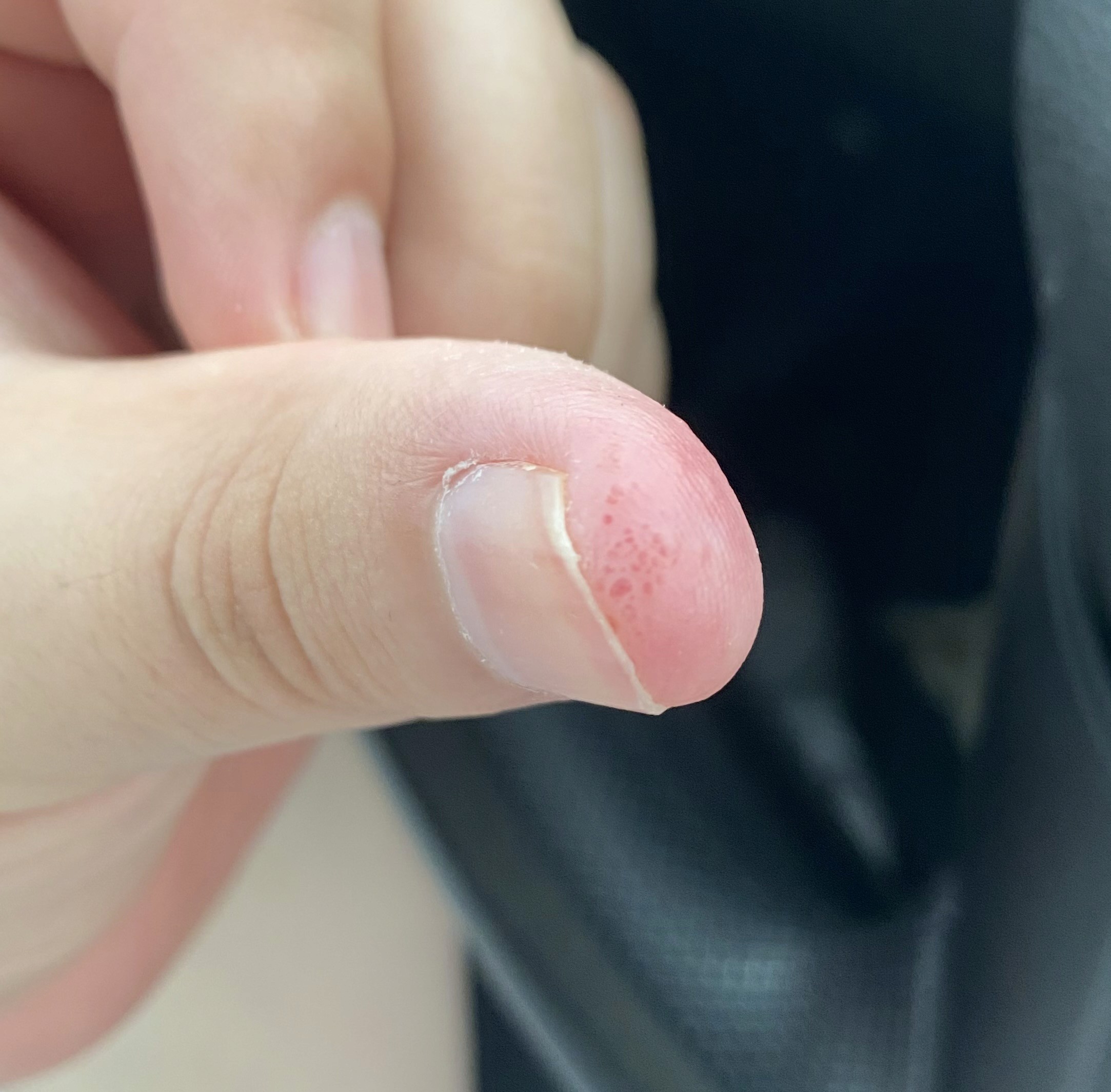
I struggled with dyshidrosis on my thumb for months. At one point my finger got infected — I went through a lot before I even understood what I was dealing with. It seemed to appear out of nowhere, and for a long time I had no idea what was causing it or how to make it stop.
So I did what anyone would do: I obsessed. I scoured forums and Reddit threads, compiled lists of what worked for other people. Certain creams. Avoiding specific foods. Zinc supplements. Don't touch this, don't touch that. I tried everything on the list, one thing after another, hoping something would stick.
It helped a little. But not much. The rash would calm down, then flare again, and I could never pin down why.
The Concert That Changed Everything
Then I went to a concert. I was leaning against a metal railing, bare hand resting on it for most of the show. I didn't think anything of it. The next day, I had a new patch of the rash — exactly where my palm had been pressing against that rail.
That was my breakthrough. Not from research. From accident.
Once I made that connection, I started paying closer attention to everything my hands touched. I noticed the rash came back when I stopped taking zinc. It flared when I used Dawn dish soap. When I went to the gym without gloves, same thing. Each observation built on the last until I had a clearer picture: my skin reacts to contact with certain metals, surfaces, and chemicals.
What Actually Worked
Now I wear gloves at the gym. I use my sleeves or a piece of fabric to open public doors when I can. I switched to hypoallergenic soap, shampoo, laundry detergent, and dish soap. I take zinc daily and moisturize every night.
I haven't seen the rash in a long time.
But here's the thing — I got lucky. That railing moment accidentally created what researchers call a "natural experiment." I was exposed to something new, in an isolated way, and I happened to notice the result. Most of the time, life isn't that clean. You're exposed to dozens of potential triggers every day, and you can't tell which one is the problem.
Why I Built The Pom App
This experience stuck with me. I kept thinking about how long I spent guessing, how many things I tried that didn't work, and how one random accident taught me more than months of experimentation.
I had already released an early version of thepom.app the year before — a simple symptom tracking tool. But after going through this myself, I realized it needed to be smarter. I wanted to build something that could help people find their patterns faster than I did, without relying on luck.
So I rebuilt it. I dug into clinical research to understand how real studies identify triggers, and I designed the new version around those principles.
The Science Behind Finding Your Triggers
What I learned is that random observation only gets you so far. The research is clear on a few things:
Controlled withdrawal and reintroduction is the gold standard. You remove a suspected trigger, wait, then reintroduce it and see what happens. That's how you confirm a real connection — not by guessing, but by testing. This is called an N-of-1 trial, and it's the same method used in clinical research for personalized treatment.
Real-time logging beats memory. Studies show that when people try to recall symptoms after the fact, they tend to overestimate severity and misremember timing. Logging in the moment gives you accurate data.
Lag effects matter. For things like digestive symptoms or even some skin flares, the cause might be 24 to 48 hours in the past — not the last thing you ate or touched. You need a system that can look back across that window.
You need a baseline. If you're constantly exposed to a trigger, you'll never identify it. Elimination protocols exist for a reason: you have to remove potential causes before you can reintroduce them and see a reaction.
These aren't obscure ideas. They come from institutions like Cambridge, Johns Hopkins, and NIH-funded research. I just packaged them into something usable.
Your Triggers Aren't My Triggers
The thing is, everyone's triggers are different. What worked for me — zinc, gloves, hypoallergenic products — might be completely irrelevant to your situation. Dyshidrosis alone has dozens of possible causes: stress, allergens, metals, sweat, fungi, food sensitivities. Other conditions are even more complex.
That's exactly why I didn't build an app that tells you what to avoid. I built an app that helps you figure it out for yourself, using real methodology instead of guesswork.
Try It Yourself
I'm not a doctor. Please work with one — seriously. But I know how frustrating it is to feel like you're guessing in the dark, trying remedy after remedy with no way to know if any of it is actually working.
You don't have to do it that way. You can approach it systematically. That's what thepom.app is for.
If you're dealing with dyshidrosis, migraines, rashes, digestive issues, or any symptom that seems to come and go without explanation — give it a try. It's the tool I wish I had when I was still leaning on that railing, completely unaware it was the answer I'd been looking for.